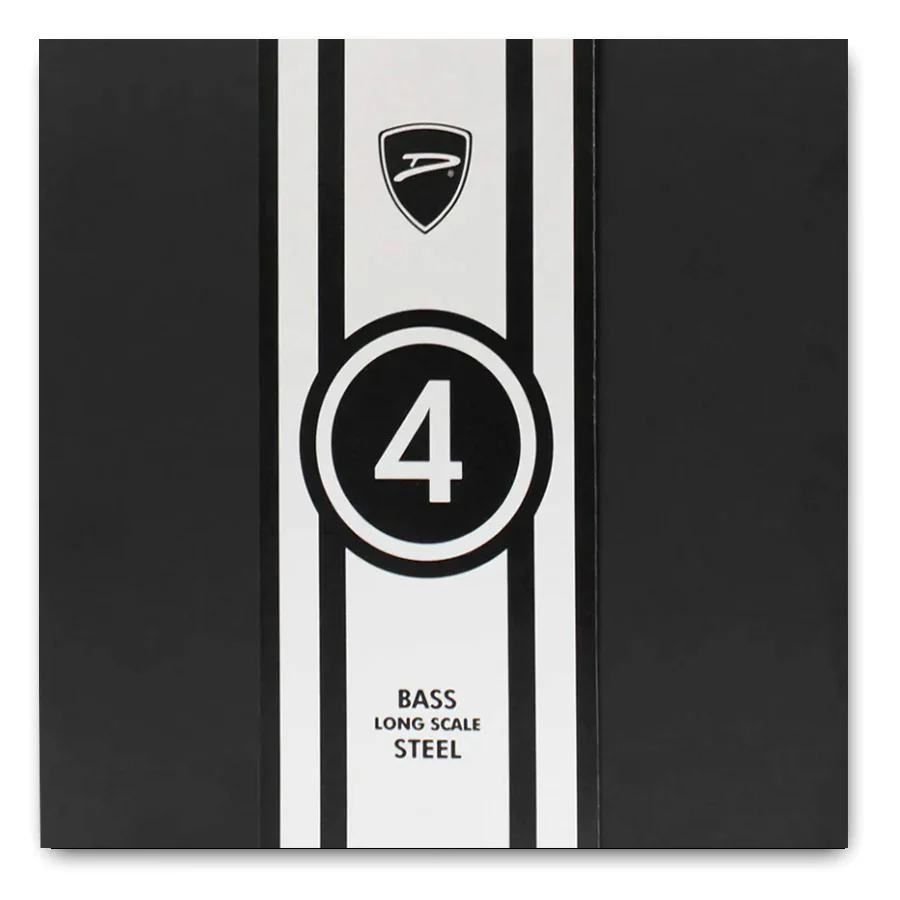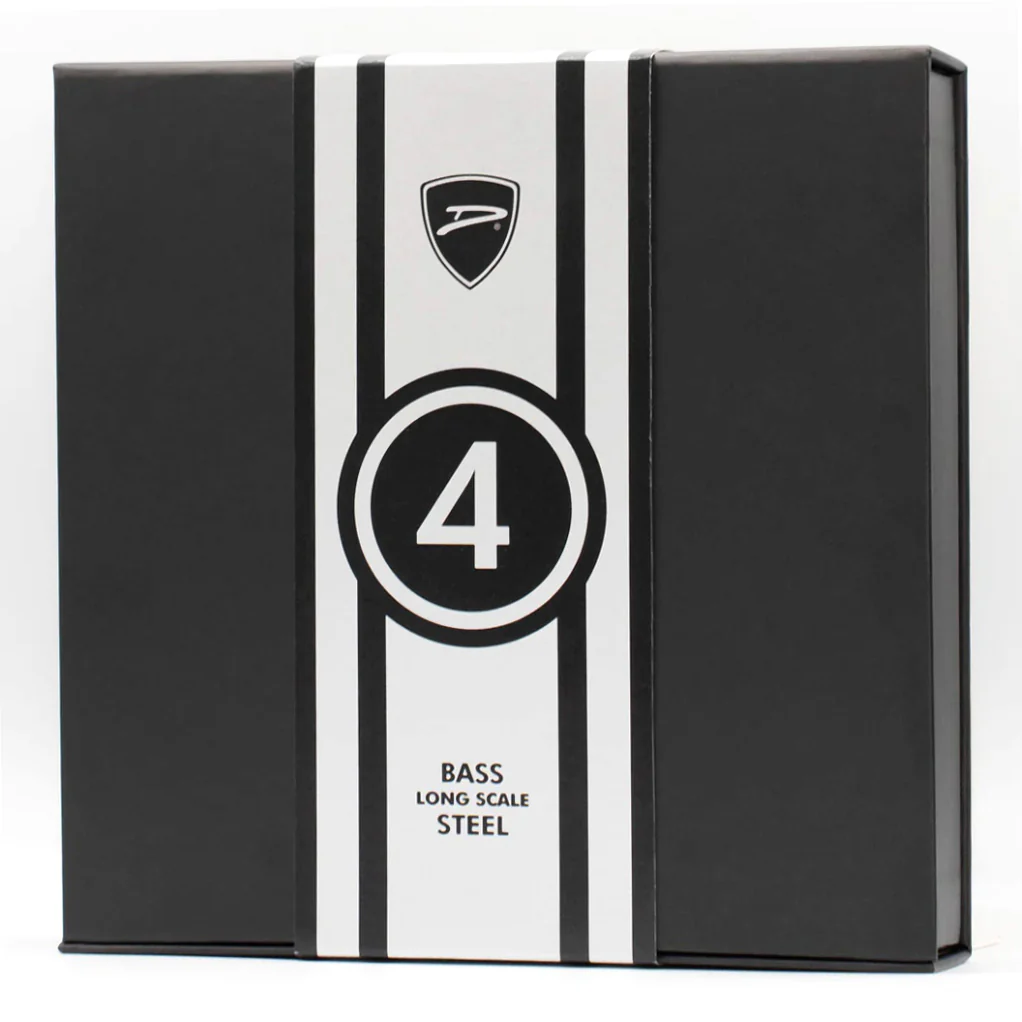
D'Addario ECB81S Short Scale Flats
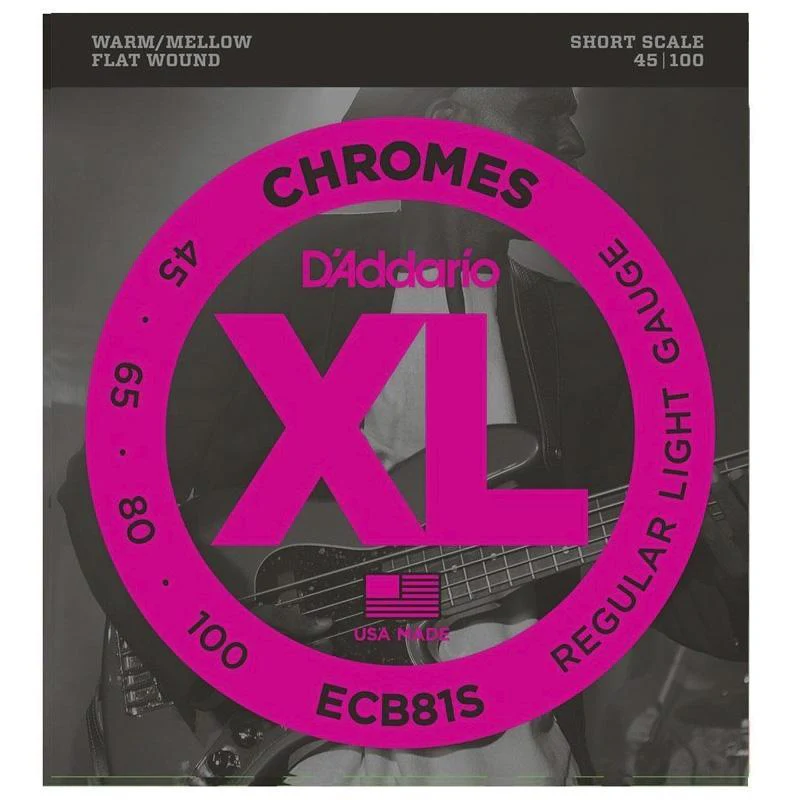
D'Addario ECB81S Short Scale Flats
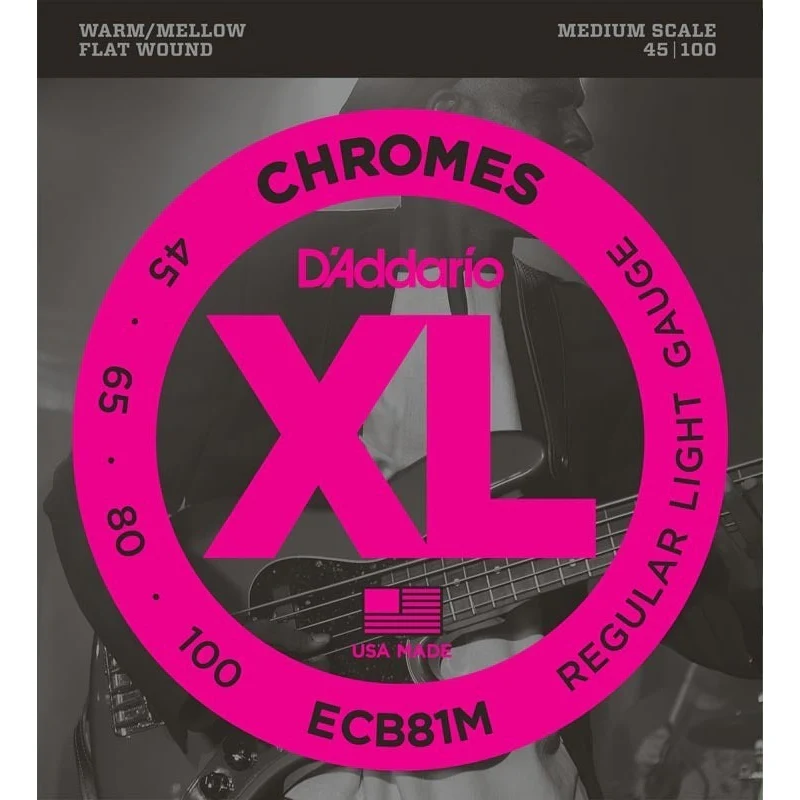
45/65/80/100
D'Addario Chromes Bass strings for short scale basses
- D'Addario's hybrid custom light gauge flatwound bass guitar set
- Ribbon wound and polished for ultra-smooth feel and warm, mellow tone
- Fits Short scale basses with a string scale length of up to 30 inches
- Made in the U.S.A. for the highest quality and performance
- Environmentally friendly, corrosion resistant packaging for strings that are always fresh
FAQ
1. What types of bass guitar strings does D’Addario offer?
D’Addario offers a range of bass guitar string sets including: coated strings (XT Nickel), premium high-carbon steel (NYXL), standard Nickel-Plated Steel (XL Nickel), flat-wound sets (XL Chromes), stainless steel bright sets (XL ProSteels), half-rounds (XL Half Rounds), tapewound sets (Tapewounds), and acoustic bass strings. D'Addario
2. What does the “coated†designation mean?
“Coated†refers to D’Addario’s proprietary XT coating: a dispersion coating applied to the wrap-wire/plain steel to provide enhanced corrosion resistance and extended string life while retaining a natural feel. D'Addario
3. How do I choose the right material or construction for bass strings?
You should consider:
-
Wrap-wire material (e.g., Nickel-Plated Steel, Stainless Steel, Black Nylon for tapewounds) — each affects tone. D'Addario
-
Construction: round-wound (bright/versatile), half-round (smoother feel, reduced finger noise), flat-wound (warm/mellow tone) — these options affect feel and tone. D'Addario
-
Gauge and scale length: lighter gauge = easier playability; heavier gauge = more volume/resonance. D'Addario
-
Coating vs uncoated: coated gives longer life. D'Addario
4. What gauge bass strings should I use?
Most bass players use a “Regular Light†gauge (around .045-.100) for a balanced tone and playability. However, preferred gauge depends on your playing style, genre, technique, and instrument tuning. D'Addario Use tools like the String Tension Pro to estimate setup. D'Addario
5. Are bass guitar strings different from regular guitar strings?
Yes — bass strings are thicker and longer (to accommodate lower pitch) and use different winding and materials to handle higher tension and deliver deeper resonance and tone. D'Addario
6. Is there a difference between electric-bass and acoustic-bass strings?
Yes — Acoustic bass strings typically use bronze or phosphor bronze windings for a warm, resonant tone, while electric bass strings often use nickel-plated or stainless steel for punch and clarity. Choose strings designed specifically for your instrument type. D'Addario
7. What scale lengths and string counts are available?
D’Addario offers sets for various scale lengths (short, medium, long, super-long, multi-scale) and instrument types: 4-string, 5-string, 6-string (and sometimes 8 or 12 string basses) depending on the model. D'Addario
8. How long do coated bass strings last compared to uncoated ones?
While the exact lifespan varies by use, playing environment and sweat/corrosion, coated strings (XT) are designed to extend string life significantly relative to uncoated sets due to the corrosion-resistant coating. D'Addario
9. I use alternate tunings / heavy drop tuning — what should I consider?
If you’re tuning lower (drop tunings) or using heavy gauges, you may benefit from heavier gauge string sets (for more tension/resonance) or premium break-strength strings (e.g., NYXL) that are engineered for more durability and presence. D'Addario
10. How do I optimise store-bought strings for my bass?
-
Stretch new strings gently and retune until stable.
-
Clean your fretboard/rust-prone areas to help life.
-
Consider coatings or flat-wounds if you play frequently or in sweaty/humid conditions.
-
Match string set scale length and string count (4/5/6) to your bass.
11. Where are D’Addario bass guitar strings made?
D’Addario bass guitar strings are made in the USA with high standards of engineering for sound, feel and strength. D'Addario
12. What tone differences can I expect between the different string types?
-
Nickel-Plated Steel (e.g., XL Nickel): Bright & versatile. D'Addario
-
Stainless Steel (e.g., XL ProSteels): Sharper, more presence & crunch — great for cutting through mix. D'Addario
-
Flat-Wound (e.g., XL Chromes, Tapewound): Warm/mellow, smooth feel — ideal for jazz, vintage styles. D'Addario
-
Coated (XT): Extends life while retaining similar tone to uncoated. D'Addario
13. Can I mix string gauges or types on my bass?
Yes — many players customise string sets to their taste (e.g., mix gauge tension across strings, flat-wound for lower strings / round for higher). Just ensure the overall tension and scale length remain suitable for your bass. When in doubt, consult a luthier or use a tension-calculator tool.
14. How often should I change my bass strings?
There’s no fixed interval — it depends on how much you play, sweat/environment, style (finger vs pick vs slap), and your tone preference. If strings start to sound dull, lose brightness, or tuning stability drops, it’s time to change. Using a coated set can extend that interval.
15. Can I use bass guitar strings on a different instrument (e.g., baritone guitar or piccolo bass)?
Possibly — but be mindful: instrument scale length, tuning, string count, and required tension vary. The manufacturer specifically designs sets for bass guitars (4/5/6-string etc.). Using the correct scale/length string sets ensures proper tension, intonation and feel. D'Addario
Description
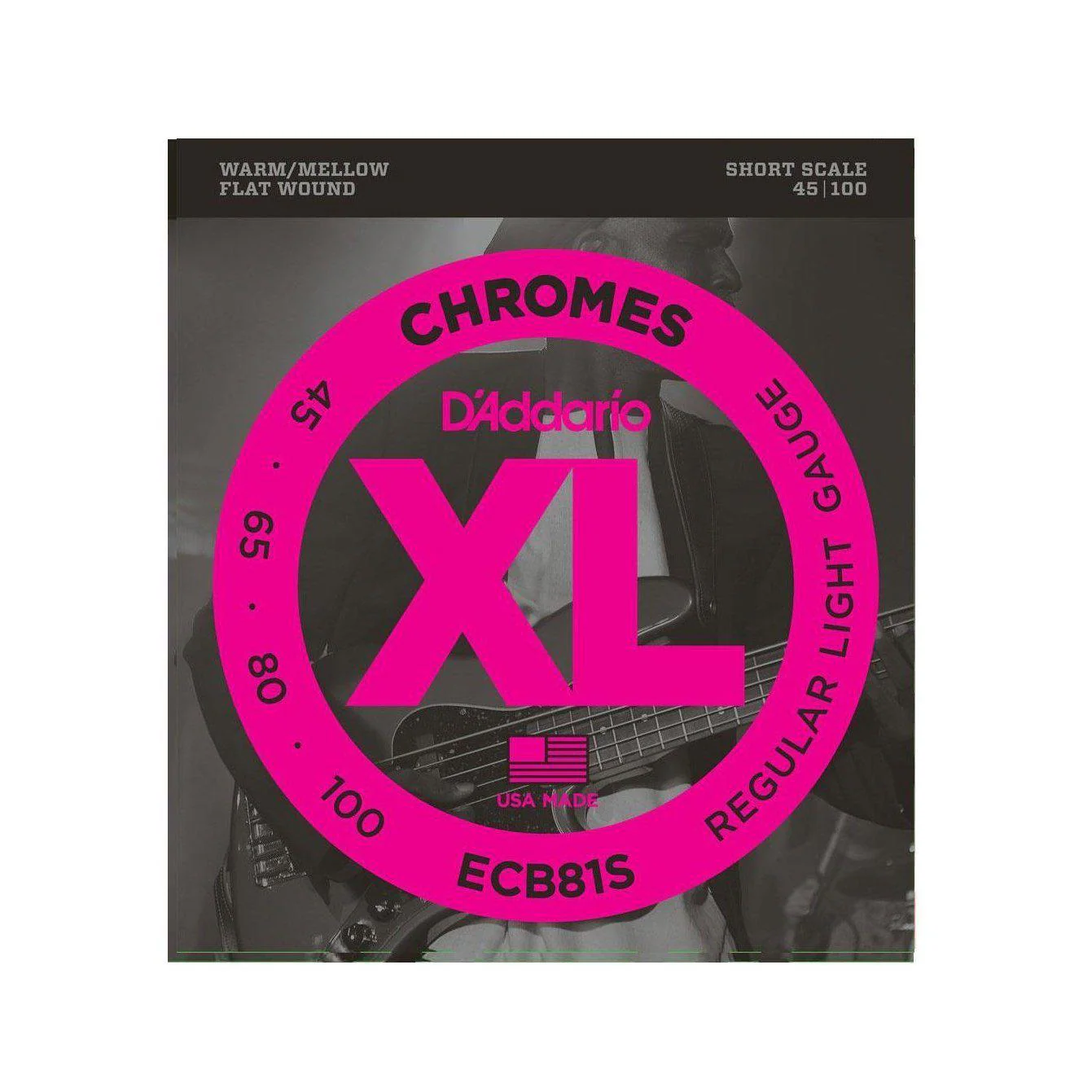
D'Addario ECB81S Short Scale Flats
45/65/80/100
D'Addario Chromes Bass strings for short scale basses
- D'Addario's hybrid custom light gauge flatwound bass guitar set
- Ribbon wound and polished for ultra-smooth feel and warm, mellow tone
- Fits Short scale basses with a string scale length of up to 30 inches
- Made in the U.S.A. for the highest quality and performance
- Environmentally friendly, corrosion resistant packaging for strings that are always fresh
FAQ
1. What types of bass guitar strings does D’Addario offer?
D’Addario offers a range of bass guitar string sets including: coated strings (XT Nickel), premium high-carbon steel (NYXL), standard Nickel-Plated Steel (XL Nickel), flat-wound sets (XL Chromes), stainless steel bright sets (XL ProSteels), half-rounds (XL Half Rounds), tapewound sets (Tapewounds), and acoustic bass strings. D'Addario
2. What does the “coated†designation mean?
“Coated†refers to D’Addario’s proprietary XT coating: a dispersion coating applied to the wrap-wire/plain steel to provide enhanced corrosion resistance and extended string life while retaining a natural feel. D'Addario
3. How do I choose the right material or construction for bass strings?
You should consider:
-
Wrap-wire material (e.g., Nickel-Plated Steel, Stainless Steel, Black Nylon for tapewounds) — each affects tone. D'Addario
-
Construction: round-wound (bright/versatile), half-round (smoother feel, reduced finger noise), flat-wound (warm/mellow tone) — these options affect feel and tone. D'Addario
-
Gauge and scale length: lighter gauge = easier playability; heavier gauge = more volume/resonance. D'Addario
-
Coating vs uncoated: coated gives longer life. D'Addario
4. What gauge bass strings should I use?
Most bass players use a “Regular Light†gauge (around .045-.100) for a balanced tone and playability. However, preferred gauge depends on your playing style, genre, technique, and instrument tuning. D'Addario Use tools like the String Tension Pro to estimate setup. D'Addario
5. Are bass guitar strings different from regular guitar strings?
Yes — bass strings are thicker and longer (to accommodate lower pitch) and use different winding and materials to handle higher tension and deliver deeper resonance and tone. D'Addario
6. Is there a difference between electric-bass and acoustic-bass strings?
Yes — Acoustic bass strings typically use bronze or phosphor bronze windings for a warm, resonant tone, while electric bass strings often use nickel-plated or stainless steel for punch and clarity. Choose strings designed specifically for your instrument type. D'Addario
7. What scale lengths and string counts are available?
D’Addario offers sets for various scale lengths (short, medium, long, super-long, multi-scale) and instrument types: 4-string, 5-string, 6-string (and sometimes 8 or 12 string basses) depending on the model. D'Addario
8. How long do coated bass strings last compared to uncoated ones?
While the exact lifespan varies by use, playing environment and sweat/corrosion, coated strings (XT) are designed to extend string life significantly relative to uncoated sets due to the corrosion-resistant coating. D'Addario
9. I use alternate tunings / heavy drop tuning — what should I consider?
If you’re tuning lower (drop tunings) or using heavy gauges, you may benefit from heavier gauge string sets (for more tension/resonance) or premium break-strength strings (e.g., NYXL) that are engineered for more durability and presence. D'Addario
10. How do I optimise store-bought strings for my bass?
-
Stretch new strings gently and retune until stable.
-
Clean your fretboard/rust-prone areas to help life.
-
Consider coatings or flat-wounds if you play frequently or in sweaty/humid conditions.
-
Match string set scale length and string count (4/5/6) to your bass.
11. Where are D’Addario bass guitar strings made?
D’Addario bass guitar strings are made in the USA with high standards of engineering for sound, feel and strength. D'Addario
12. What tone differences can I expect between the different string types?
-
Nickel-Plated Steel (e.g., XL Nickel): Bright & versatile. D'Addario
-
Stainless Steel (e.g., XL ProSteels): Sharper, more presence & crunch — great for cutting through mix. D'Addario
-
Flat-Wound (e.g., XL Chromes, Tapewound): Warm/mellow, smooth feel — ideal for jazz, vintage styles. D'Addario
-
Coated (XT): Extends life while retaining similar tone to uncoated. D'Addario
13. Can I mix string gauges or types on my bass?
Yes — many players customise string sets to their taste (e.g., mix gauge tension across strings, flat-wound for lower strings / round for higher). Just ensure the overall tension and scale length remain suitable for your bass. When in doubt, consult a luthier or use a tension-calculator tool.
14. How often should I change my bass strings?
There’s no fixed interval — it depends on how much you play, sweat/environment, style (finger vs pick vs slap), and your tone preference. If strings start to sound dull, lose brightness, or tuning stability drops, it’s time to change. Using a coated set can extend that interval.
15. Can I use bass guitar strings on a different instrument (e.g., baritone guitar or piccolo bass)?
Possibly — but be mindful: instrument scale length, tuning, string count, and required tension vary. The manufacturer specifically designs sets for bass guitars (4/5/6-string etc.). Using the correct scale/length string sets ensures proper tension, intonation and feel. D'Addario